








29 Easy Riddles With Answers – See A Really Fun List of Questions

 Story by:
Kyle Boureston
Story by:
Kyle Boureston

Looking to train your brain with some easy riddles with answers?
Riddles are great questions to ask and ice breaker games. Trivia is not so different from riddles – and I’ve written plenty of articles about them, like baby trivia questions and Hamilton trivia questions, so you can trust me to create some easy riddles for you and your friends to enjoy!
Ready? Let’s begin.
Contents






Greatest List Of Easy Riddles With Answers

Riddles and brain teasers are great ways to improve your critical thinking and problem-solving skills. A brain teaser can be a great puzzle for your brain and a great way to start an engaging conversation. So, I’ve assembled a list of simple riddles that any person, from a kid to an adult and even those of old age, can enjoy! Can you answer them all?
Contents





5 The Easiest Riddles For Kids That Will Keep Them Entertained (answers supplemented)

These simple riddles are great for asking kids. They all have a simple answer that even older kids can deduce. Watch out, though! These can be hard questions for adults to answer because of their simplicity. Can you answer every tricky riddle included here?
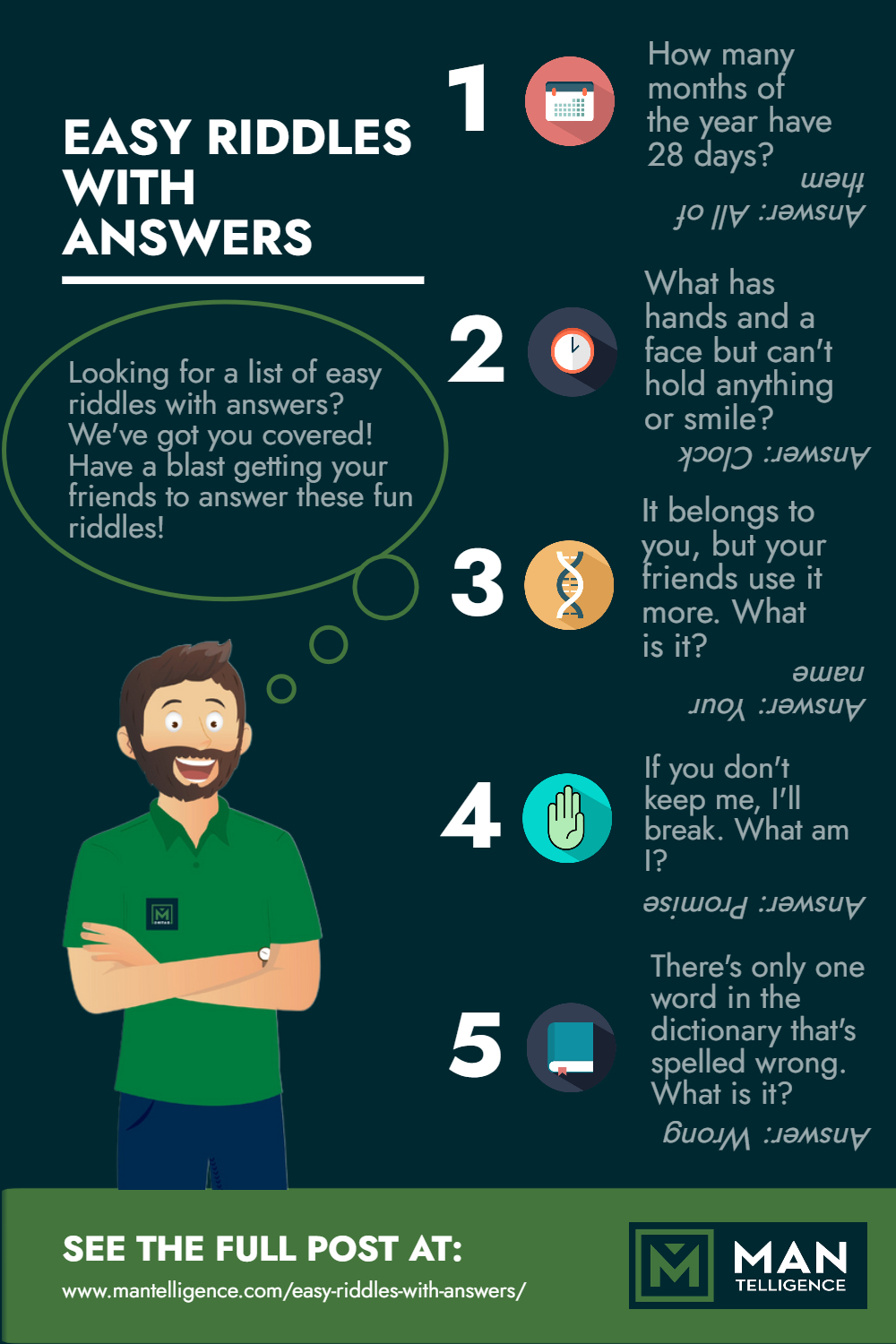
1. How many months of the year have 28 days?
2. What has hands and a face but can’t hold anything or smile?

3. It belongs to you, but your friends use it more. What is it?
4. If you don’t keep me, I’ll break. What am I?

5. There’s only one word in the dictionary that’s spelled wrong. What is it?
Share This Image On Your Site
5 Hilarious Riddles Ever Created (plus answers!)

Riddles don’t all have to be mentally challenging! Sometimes, riddles can be there to make you laugh. These funny riddles have hilarious answers, so relax and enjoy these silly riddles that will help you have fun!
6. What do you call a fairy that has not taken a bath?

7. Why are teddy bears never hungry?
8. Why was the belt arrested?

9. What is the best cure for dandruff?
10. What did one potato chip say to the other?

5 Easy Questions for Adults That They Might Find Challenging (answers provided)

Just because this list is about easy riddles doesn’t mean they can’t provide a challenge! These tricky riddles for adults require an open mind to solve. If you’re looking for challenging riddles to ask your adult friends, here are some of the best ones we could find. If you can’t find the answers after thinking about them yourself, don’t worry! We’ve included the answers for you.
11. What is full of holes but still holds water?
12. What question can you never answer yes to?

13.What is always in front of you but can’t be seen?
14. What gets wet while drying?

15. I shave every day, but my beard stays the same. What am I?
5 Most Common and Popular Riddles Everyone May Have Heard Already (answers added)

If you’re struggling to come up with your own riddles, why don’t you try some of these? These are popular and well-known, but that doesn’t mean they’re boring. They’re perfect for filling the space between riddles of your own – and also great for giving your friends a wisdom check to see if they’ve heard it before. So, here are some of the most popular and well-known riddles!
16. The rich men want it, the wise men know it, the poor all need it, and the kind men show it.

17. I work when I play and play when I work.
18. I look at you, you look at me. I raise my right hand, you raise your left hand. What am I?

19. What goes up the hill and down the hill, And spite of all, yet standeth still?
20. The root tops the trunk on this backward thing that grows in the winter and dies in the spring.

5 Brain Teasers You Can Answer with No Sweat (with answers)

Riddles are exceptional brain teasers because they force you to use your brain to think of what they’re describing. Some are very hard, while others are pretty simple. No matter how difficult or easy, they’re fun ways to train your brain! Here are some of the easier ones we could find in this list – they may be on the easy side of the spectrum, but they’re still fun to try and answer. So, try out some of these brain teasers that you can answer, no sweat!
21. What is harder to catch the faster you run?
22. What fastens two people yet touches only one?

23. What can be swallowed but can also swallow you?
24. Which three letters can frighten a thief away?

25. What rocks but does not roll?
4 ‘What am I’ Puzzles That Will Get Everyone Thinking

What am I? A question many puzzles pose. What am I riddles task you to picture the answer to the question – and if you’ve got the right answer, it means you pictured it perfectly. So, try to find out what these are before you look at the answers!
26. I can be cracked, I can be played, I can be told, I can be made. What am I?

27. I’m tall when I’m young and short when I’m old. What am I?
28. I have a head and a tail that will never see. You can always have too many of me. What am I?
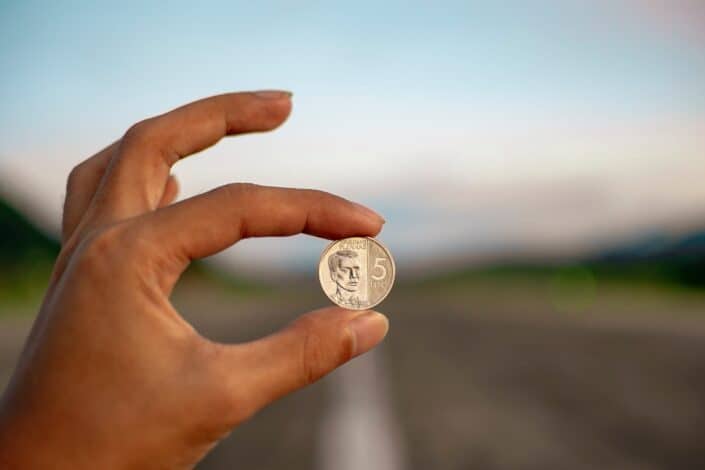
29. I am so fragile; saying my name will break me. What am I?
Downloadable and Printable List of Easy Riddles With Answers
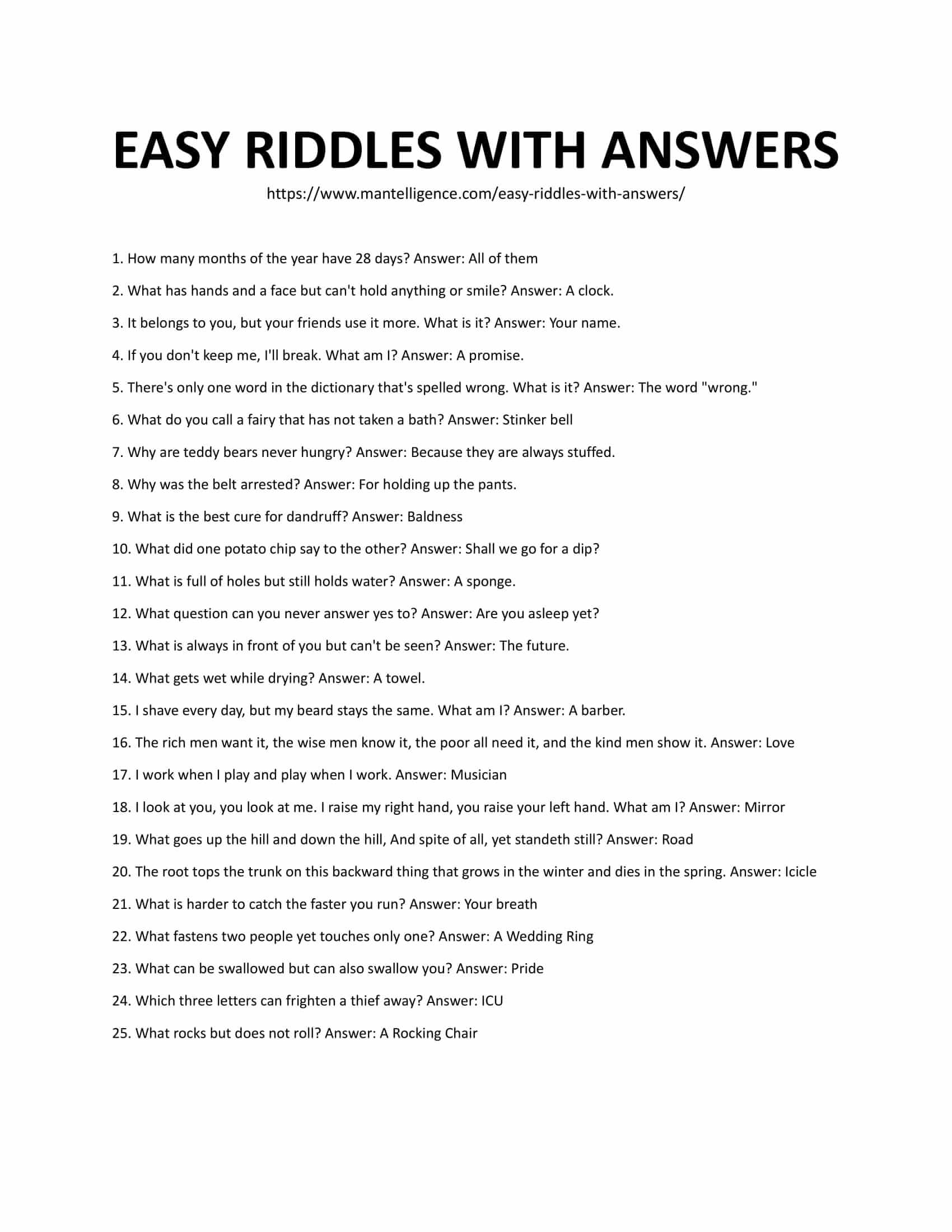
Here is a downloadable and printable jpg/pdf list of easy riddles with answers (right-click the image and select Save Image As…):
Why Are Riddles Good For The Brain? 3 Benefits

Riddles are great for training your brain, sharpening your critical thinking, and honing your mastery of wordplay. But, do you know why they’re so good for you? I’ve listed a few major benefits of asking and answering riddles here, but be reminded that they’re good for so many things it’s hard to list them all.
1. They broaden your perspective.

The thing about riddles is that they’re very rarely literal. Riddles trick you with word puzzles and vague descriptions, forcing you into thinking with a broad mindset to try and answer them correctly. Even the riddles with simpler answers out there force you to follow a long train of thought to arrive at their answers. So, riddles are good for opening your mind to all possibilities.
2. They make you think outside the box.

Challenging riddles have answers that, while sometimes obvious, aren’t obvious to people who take the riddle at face value. Often, the obviousness of the answer is only noticeable when you think differently from how you usually would. To arrive at the peculiar logic the riddle follows, you’ll have to think outside the box to reach the proper conclusion.
3. They make you pay attention.

Riddles are also sometimes word puzzles, which try to lead you down a specific train of thought – usually the wrong one. Because of that, paying close attention to the wording of the riddles is the key to finding the correct answer. If you swallow the words of the riddle at face value, you might end up down the wrong train of thought – so word riddles are helpful ways of making you pay attention to the words themselves. If you’ve paid attention to the riddle’s literary conventions, then it becomes easier to answer!
Other Activities That Will Make Your Mind Busy

Solving riddles isn’t the only way you can keep your brain occupied! Other brain-stimulating activities exist. Puzzles are great for stimulating your thinking.
Puzzles have taken on many shapes and designs over the years, but all these variations’ end goal is the same; improving a certain brain process, whether critical thinking, memory, or creativity. So, here are some other puzzle-like activities that will help you train your brain!
1. Crossword Puzzles
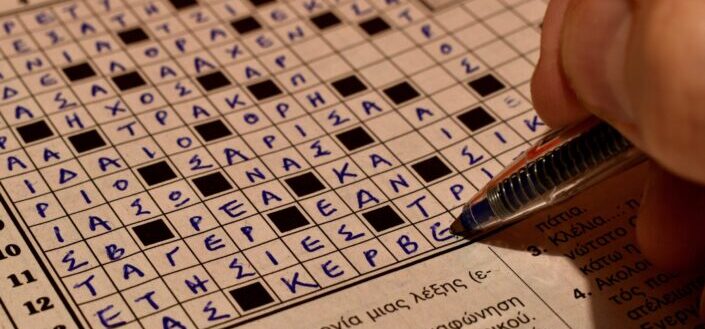
Crossword puzzles are like riddles, except there are multiple riddles all at once, and they all connect via the answers’ letters. Because of this, crossword puzzles are extremely helpful for testing your overall knowledge and ability to discover the answers through small clues. If you have free time after reading your favorite newspaper, do try the crossword puzzles.
Both will improve your overall knowledge!
2. Sudoku
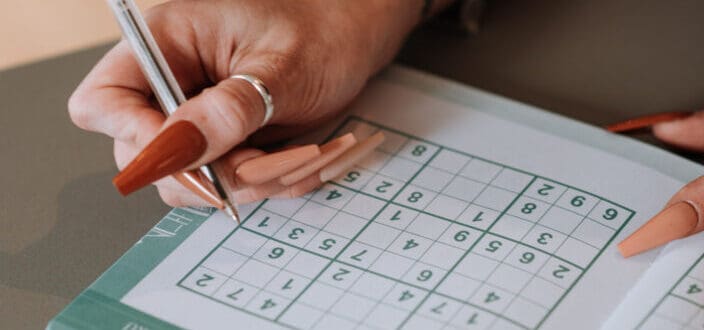
Despite the Japanese name, Sudoku wasn’t invented in Japan. It was created by Howard Garns, a retired architect from Indiana. It went by the name Number Place and eventually soared in popularity, especially in Japan, where the term Sudoku was coined.
The objective of Sudoku is to fill a 9×9 square with numbers. This 9×9 square is split into numerous 3×3 squares, nine in total. Each 3×3 square can only contain numbers 1 to 9, and one must ensure each column and row does not contain the same number twice.
Despite playing with numbers, Sudoku isn’t math – it’s a puzzle where one must be careful not to use the same number twice. Sudoku is great for training your critical thinking with numerous ways to approach the puzzle.
3. Chess

Chess is seen as an intellectual game and certainly lives up to that. One must think carefully and plan their moves in advance to corner the opponent’s king, all while an intelligent opponent tries to do the same to you. In a way, it’s similar to a war game – one must take careful note of troops and what they can do and try to minimize casualties as it will make it easier to checkmate the king.
Because of that, chess is a way to improve both players’ tactics and strategy – and improve their ability to plan things in advance or respond to their opponent’s moves. Thus, chess is an incredibly fun and challenging game for the brain.
4. Jigsaw Puzzles

Unlike the other entries in this section, Jigsaw Puzzles don’t train your knowledge or critical thinking but instead improve your visual senses and memory. In a jigsaw puzzle, you are tasked to form a perfect square or rectangle with a set number of pieces. These pieces only have their shapes as a clue – no numbers or markings indicate which piece goes where.
Jigsaw puzzles train your ability to form a picture in your brain and use the pieces afforded to you to construct that image with only visual clues. It also helps train your ability to memorize the image you’ve formed of the end product.
5. Memory Test Games

There are multiple ways to train your memory, and memory test games exist by the number to help train that ability. The Grocery List game takes your shopping list and makes a small game out of it, tasking you with memorizing what items you need and their quantities. Spot the Difference has you try to find the differences between two images.
Multiplication Tables can be solved naturally, but memorizing them is simply faster for most math students. There are many ways to train your memory, from simple tasks to complicated puzzles – you just have to give it some tries to reap the benefits.
Frequently Asked Questions

After reading this article, you must have had plenty of opportunities to stimulate your brain through all the riddles we’ve assembled. Are you interested in finding more riddles or coming up with your own? If so, I’ve answered some helpful frequently asked questions about making and understanding riddles. These should help you get a headstart!
What is the purpose of a riddle?
Naturally, riddles are made to stimulate the mind. Their focus on wordplay, abstract or vague descriptions, and unusual trains of thought make the person who’s asked think hard about the proper answer. Because of that, they’re great brain teasers and brain trainers for everyone.
How do you make a riddle?
When making your riddle, the idea is to think of the answer first before the question. First, select the subject of your riddle. Then, try to find out as much about it as you can. Find out something true about the subject, then use clever wordplay to form a question about that fact. It takes some practice to make some good riddles, so keep trying until you can make a difficult riddle to answer!
Do riddles have to rhyme?
Not all riddles have to rhyme! Rhyming riddles are just a means to confuse the one being asked, to shadow the answer from their view. If you can make it rhyme, you are making it harder to answer – but some questions don’t have to rhyme to be difficult. Do it only if you want to, or want to practice your rhyming skills.
How do I teach my child to write riddles?
The best way is to get them acquainted with riddles early on. Buy them a book of riddles to start, and let them learn on their own about them, providing advice when needed. After they’ve collected enough experience and familiarity with riddles, you can start to help them create their own – and in time, they’ll be able to make their own riddles, which they’ll undoubtedly ask you!
Does solving riddles make you smarter?
Riddles are brain training exercises designed to make you think differently about how you approach a question. They broaden your perspective and encourage you to think outside the box. So, they can help you become smarter by changing your thinking! Solving riddles proves that you’re capable of alternative thinking, thereby making you smarter.
When is the best time to play riddles with friends?
The best time to play riddles with your friends is when nothing’s happening, and everyone has attention to spare. During a moment when you’ve got nothing planned, ask your friends a few riddles – whether the riddles are simple or difficult, it’ll take plenty of thinking for them to answer. Perfect for making use of their time!
Are riddles effective icebreakers at a party?
When there’s a lull in the activity and no one’s rushing to fill it, riddles can be a great way to pass the time. After meeting a few new faces at a party, once you’ve gotten the introductions out of the way, one can enjoy a fun brain teaser to get to know them – and what they know better.
More Awesome Riddles to Trick A Kid With
Those were some fun riddles to answer! Were you able to get them all correct? If you enjoyed the article but still haven’t had enough, don’t worry – we’ve got plenty more riddles for you to answer. Why not check out some of these articles about more riddles? These are some of the best that any kid or adult can enjoy!
- “What am I?” riddles are fun riddles to answer. Try to find out the thing being described!
- Want to stimulate your brain further? We have some clever riddles for you, perfect for the smart ones out there!
- Lastly, would you like to finish it off with some fun riddles that anyone can enjoy?
Conclusion
There are plenty of easy riddles with answers out there, and while they’re all simple, they’re no less fun to ask. If you’re fond of riddles and word games, then hopefully, this article was helpful to you. You’ll never have a dull moment with friends ever again, now that you’ve got plenty of interesting riddles to ask them!





Comments 0
No Readers' Pick yet.